If you're setting up a furniture manufacturing unit, upgrading from manual carpentry, or simply trying to make sense of the machines you keep hearing about — panel saws, edge banders, CNC routers — this guide is for you. It breaks down the core categories of industrial woodworking machinery, what each one actually does on a production floor, and how to think about buying your first (or next) machine without wasting money on the wrong specification.
This guide is written for the Indian furniture manufacturing context — small workshops scaling into semi-automated units, and semi-automated units moving toward full production lines.
Why "Industrial" Woodworking Machines Are Different
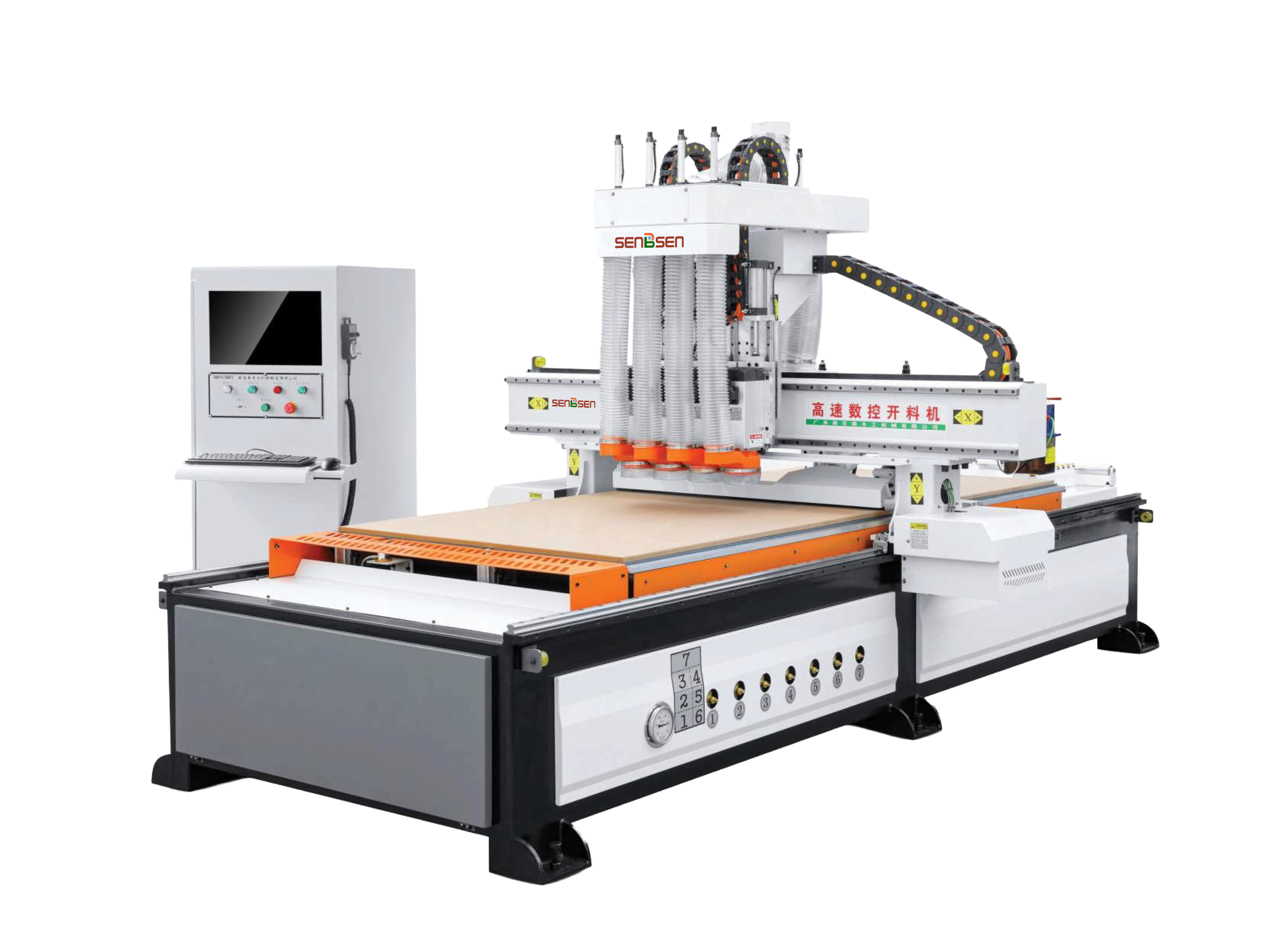
A hobbyist table saw and an industrial panel saw look similar on the surface — both cut wood. But industrial machines are built around three things a hobby machine isn't:
Repeatability at scale — the 500th cut needs to be as accurate as the 1st.
Duty cycle — motors, bearings, and rails designed to run 8–10+ hours a day, every day.
Material range — plywood, MDF, particle board, veneered boards, and solid wood, often at panel sizes no manual saw can safely handle.
Once a workshop crosses a certain order volume, manual tools stop being a cost-saver and start being the bottleneck. That's the point where industrial machinery pays for itself in labour hours, material wastage reduction, and finish quality.
The Core Machine Categories You Need to Know
1. Panel Saws (Beam Saws)
What it does: Cuts full-size boards (plywood, MDF, particle board) into precise panels — the very first step in almost every furniture production line.
Why it matters: A good panel saw gives you straight, splinter-free edges and consistent sizing, which directly affects how well your edge banding and assembly steps go later. A cheap or poorly calibrated saw creates a ripple effect of errors through the entire line.
What beginners get wrong: Buying a saw sized for today's orders instead of the panel sizes you'll need in 2–3 years. Beam length and cutting capacity are expensive to "upgrade" later — you're usually just buying a new machine.
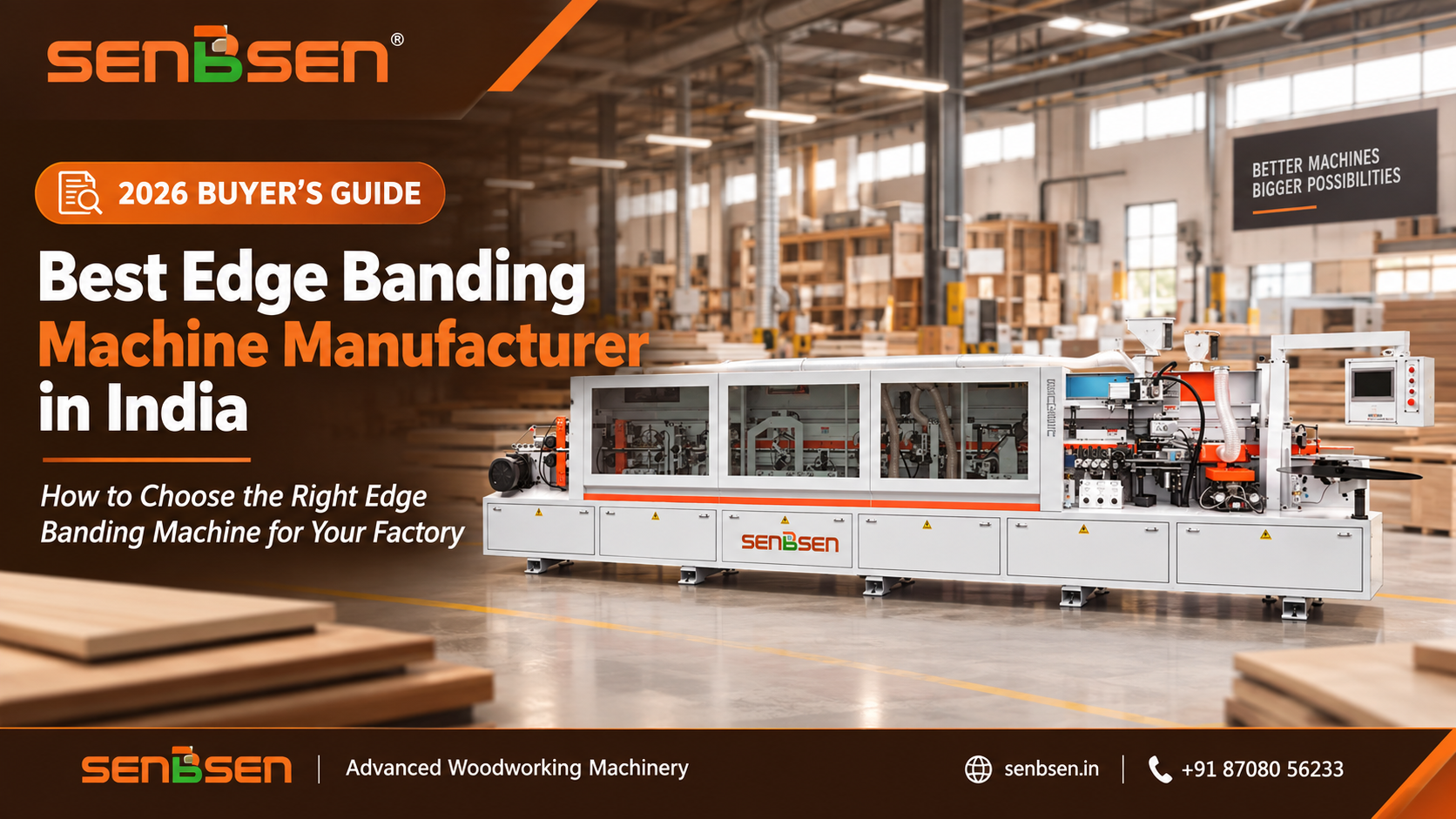
2. Edge Banding Machines
What it does: Applies a thin strip of PVC, veneer, or laminate edging to the raw edges of a cut panel, giving furniture its finished, sealed look and protecting the board from moisture.
Why it matters: Edge quality is one of the most visible things a customer notices on a finished piece of furniture. A poor edge bander leaves visible glue lines, chipping, or an inconsistent trim — all of which show up as returns and rework.
What beginners get wrong: Ignoring glue type and pre-milling units. Hot-melt EVA glue is fine for basic work, but PUR (polyurethane) glue gives a near-invisible "zero glue line" finish that's now standard for premium furniture — and machines need to be built to handle it.
3. CNC Routers
What it does: Computer-controlled cutting, drilling, and shaping of panels — everything from cabinet door profiles to complex inlay work, based on a digital design file.
Why it matters: A CNC router replaces multiple manual operations (cutting, drilling, grooving, profiling) with one automated process, cutting down on labour dependency and human error. It's usually the single biggest jump in production capability a workshop makes.
What beginners get wrong: Underestimating the software and training curve. A CNC router is only as good as the operator's ability to design and set up toolpaths — factor in training time and software cost, not just the machine price.
4. Cold Presses
What it does: Applies even pressure across a panel to bond veneer, laminate, or decorative sheets to a substrate using adhesive, without heat.
Why it matters: Cold presses are essential for veneer-based and laminate furniture work, giving a strong, bubble-free bond. They're generally more affordable and simpler to maintain than hot presses, making them a common first "bonding" machine for growing workshops.
What beginners get wrong: Not accounting for pressing time and clamping pressure needs — different adhesives and substrates need different dwell times, and rushing this step causes delamination down the line.
5. Nesting Machines
What it does: A specialised CNC machine designed to cut and machine multiple parts from a single large board in one optimised layout — commonly used for modular and knock-down (KD) furniture.
Why it matters: Nesting machines dramatically reduce material wastage by intelligently arranging parts on a sheet, which matters a lot given how much board material costs today. They're a natural next step after a basic CNC router for high-volume modular furniture makers.
6. Drilling and Boring Machines
What it does: Bores precise, repeatable holes for hinges, dowels, shelf pins, and hardware fittings — critical for modular and cabinet furniture assembly.
Why it matters: Hardware alignment is unforgiving — a hole off by even a couple of millimetres means doors that don't close properly or shelves that wobble. Dedicated boring machines solve this at scale far better than hand drills or jigs.
7. Sanding Machines
What it does: Smooths panel surfaces and edges before finishing — removing tool marks, calibrating thickness, and prepping the surface for paint, lacquer, or laminate.
Why it matters: Finish quality is the last thing a customer touches before they buy. Wide-belt sanders in particular are used for thickness calibration across large batches, which manual sanding simply can't match in consistency.
8. Intelligent / Automated Production Lines
What it does: Integrates several of the above processes — cutting, edge banding, drilling — into a connected line with reduced manual handling between stations.
Why it matters: This is where a workshop transitions into a true factory. Output multiplies, but so does the planning required: layout, power supply, operator training, and maintenance discipline all need to scale together.
How to Choose Your First Industrial Machine
There's no universal "best machine" — the right choice depends on your current bottleneck. A practical way to decide:
Identify your slowest manual process today. If cutting panels by hand is eating the most labour hours, start with a panel saw, not a CNC router.
Size for 2–3 years of growth, not just current orders. Machines are a multi-year investment — undersizing capacity is the most common regret among first-time buyers.
Factor in total cost of ownership, not just machine price. This includes installation, operator training, spare parts availability, service response time, and power/infrastructure requirements (many industrial machines need three-phase power and compressed air).
Check after-sales support before you check the spec sheet. A machine that's 10% cheaper but has no local service network can cost you far more in downtime than it saves upfront.
Ask for a reference installation. A supplier who can show you a real, working installation in a factory similar to yours is worth more than any brochure.
Common Mistakes First-Time Buyers Make
Buying on price alone, without checking build quality, spindle/motor origin, or after-sales network.
Skipping operator training — even a well-built machine underperforms in untrained hands.
Ignoring floor and power infrastructure — some machines need dedicated three-phase connections, dust extraction, or reinforced flooring that isn't obvious until installation day.
Not planning for consumables and spares — blades, glue, sandpaper belts, and spare parts availability should factor into your total cost calculation from day one.
No maintenance schedule — industrial machines are built for heavy duty cycles, but only if serviced on schedule. Skipping maintenance is the single biggest cause of premature machine failure.
Frequently Asked Questions
Q: What's the first machine a small workshop should buy?
Most workshops start with a panel saw, since cutting is the first bottleneck in almost every production process. From there, an edge bander is typically the second addition, since it directly affects finished-product quality.
Q: Do I need a CNC router if I already have a panel saw and edge bander?
Not necessarily. A CNC router becomes valuable once you need complex shapes, precise repeated drilling, or design flexibility that a straight-line saw can't provide — commonly the case for modular and cabinet furniture.
Q: How much floor space and power do these machines typically need?
This varies significantly by machine and model — a panel saw needs long, clear runout space on both sides of the blade, while a CNC router or nesting machine needs space for the bed, material staging, and dust collection. Always request the exact floor plan and power requirements from your supplier before finalising factory layout.
Q: Chinese machines vs. European machines — what should I know?
Modern Chinese-manufactured machinery has closed much of the historical quality gap with European brands, particularly for mid-volume operations, and is available at a significantly lower price point. The deciding factors should be build quality, component sourcing (motors, spindles, electricals), and — most importantly — the strength of local after-sales support in India.
Q: Is it better to buy machines individually or as an integrated line?
For a first purchase, buying individual machines to solve your current bottleneck is usually lower-risk. Integrated lines make sense once your volume is stable and predictable enough to justify the higher upfront investment and more rigid production flow.
Final Thoughts
The jump from manual carpentry to industrial machinery is less about buying the most advanced machine on the market and more about buying the right machine for your actual bottleneck — with a supplier who'll still be answering the phone two years after installation. Start with the process that's slowing you down most, size it for where your business is headed, and build your production line one well-chosen machine at a time.
Looking to understand which machine fits your specific production setup? Get in touch with our team for a floor-plan assessment and machine recommendation based on your order volume and product line.