An edge banding machine is one of the highest-utilization assets on a furniture production floor. Get the choice right and it runs shift after shift with minimal fuss. Get it wrong, and you're stuck with a stalled line, a manufacturer who won't answer the phone, and a technician 8,000 km away who has never seen your machine in person.
If you're evaluating edge banders for your factory, here's a practical framework for picking the right manufacturer — not just the right machine.
1. Manufacturing Capability
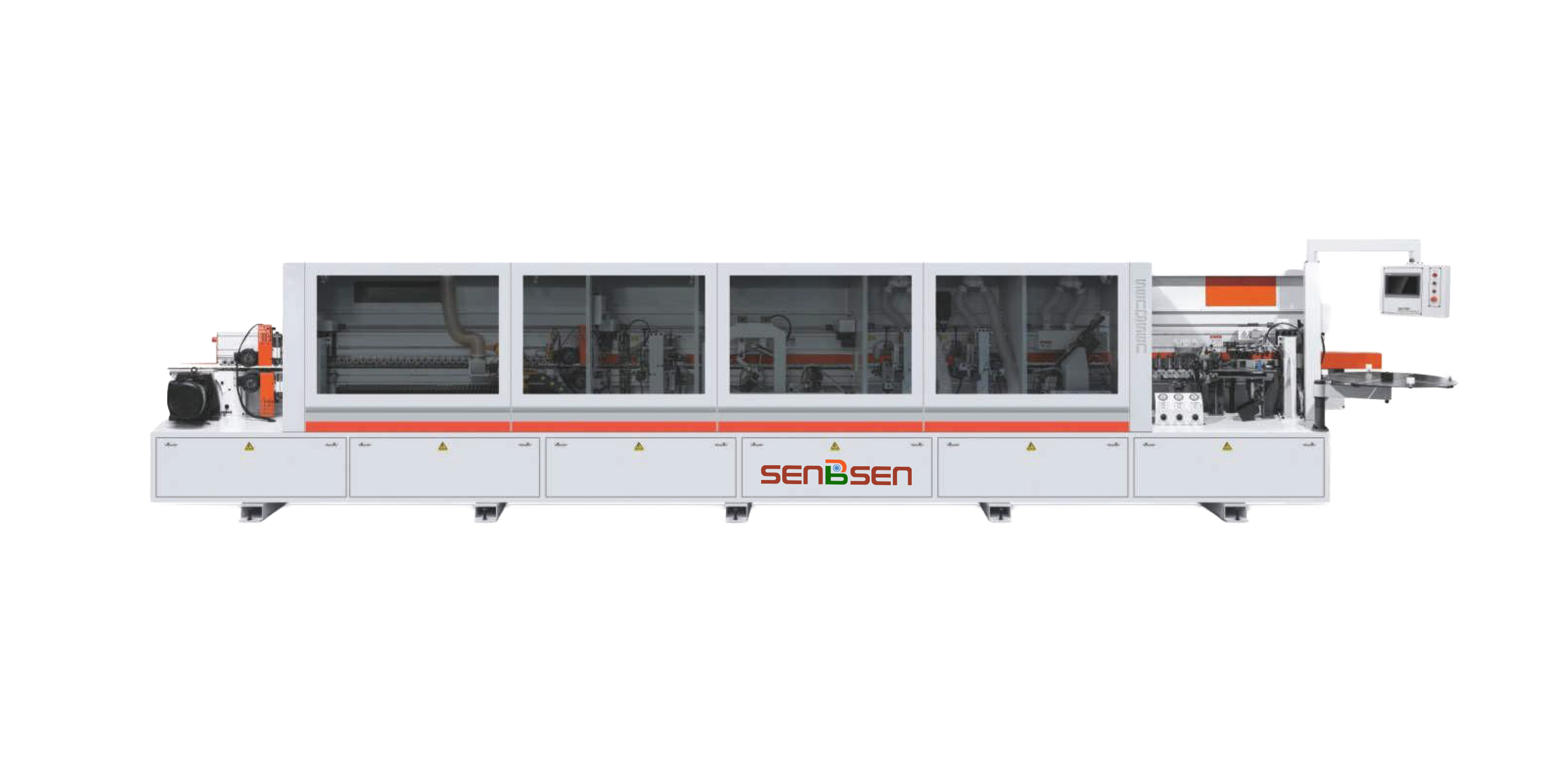
Start by looking past the brochure and at the factory itself. Does the manufacturer actually build the machine, or are they trading a white-labeled unit sourced from three different OEMs? Ask about in-house fabrication of the chassis, precision grinding of feed tracks, and whether critical components (motors, glue pots, trimming units) are manufactured or bought in. A manufacturer with real production depth can also customize a line for your panel sizes and throughput — a trading company usually can't.
2. Machine Range
A single-model supplier limits you to one price point and one capability tier. A manufacturer with a genuine range — manual edge banders, semi-automatic units, and fully automatic lines with pre-milling, corner rounding, and PUR gluing — lets you start where your budget and volume are today and upgrade without switching vendors. It also signals that the manufacturer understands different segments of the furniture industry, not just one niche.
3. Automation Level
Automation isn't a single toggle — it's a spectrum. Consider:
Manual/semi-automatic: lower cost, needs skilled operators, fine for lower volumes or job-work shops
Automatic with pre-milling: consistent panel edges regardless of saw-cut quality, reduces rework
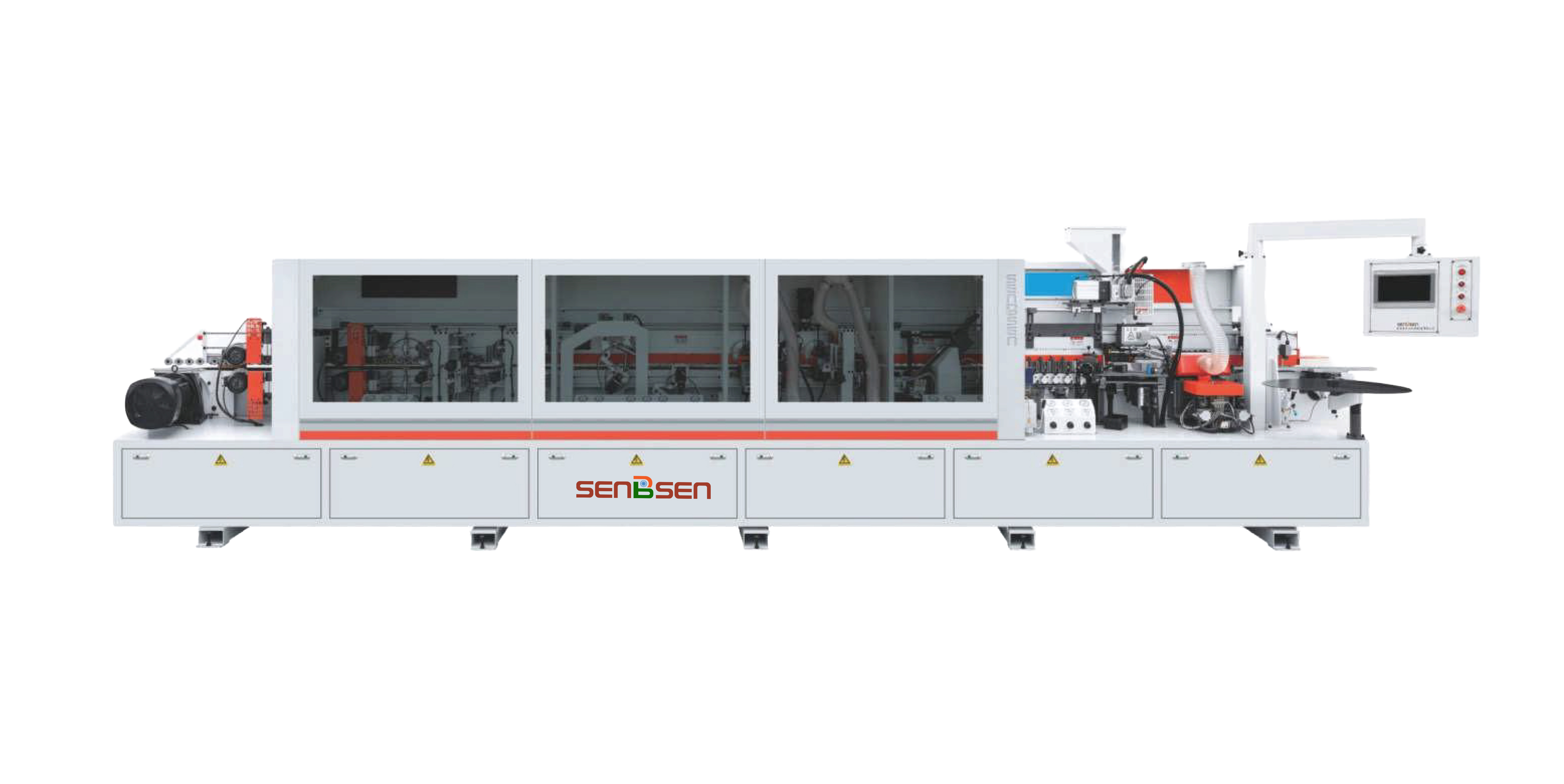
PLC-controlled multi-function lines: gluing, trimming, scraping, buffing, and corner rounding in one pass, built for continuous high-volume runs
Match automation level to your actual daily panel count, not your aspirational one. Over-automating a low-volume operation just adds maintenance overhead without a throughput payoff.
4. Material Compatibility
Confirm the machine is validated for the edge band materials you actually use — PVC, ABS, melamine, veneer, and acrylic all behave differently under heat and pressure. A machine tuned only for PVC may scorch or delaminate veneer edges. Ask for a live trial or a video demonstration on your specific material and panel thickness before committing, not just a generic spec sheet.
5. Production Capacity
Look at feed speed (meters per minute), not just "automatic vs manual." A machine rated at 18–20 m/min behaves very differently on the floor than one at 12 m/min once you're running double shifts. Cross-check the manufacturer's stated capacity against your daily panel target, accounting for changeover time between edge band types and colors.
6. Machine Specifications
Beyond speed, scrutinize the specs that determine long-term reliability:
Panel thickness and length range it can handle
Glue pot type (EVA vs PUR) and temperature control precision
Motor brands and power ratings for the main units
Track and guide construction (cast iron vs sheet metal)
Trimming unit type — fixed knife vs copy trimming
These details separate a machine that holds tolerance for years from one that needs recalibration every few months.
7. Installation
Ask exactly who installs the machine, how long it takes, and what "installation" actually includes — is it unboxing and power-on, or full commissioning with production-standard test panels before signoff? A manufacturer who sends a trained engineer to your factory and won't leave until the machine is running your actual materials is a very different proposition from one who ships a machine with a PDF manual.
8. Training
Machine performance is only as good as the operator running it. Check whether training is included, how long it runs, and whether it covers not just day-to-day operation but also basic troubleshooting, glue pot maintenance, and blade/knife changes. On-site training in your own factory, on your own panels, is worth far more than a generic video.
9. Spare Parts
This is where many buyers get caught out months after the sale. Ask directly:
Are commonly worn parts (blades, glue rollers, pressure rollers, belts) stocked in India, or shipped from the country of origin on demand?
What's the typical lead time for a spare part?
Is there a published parts catalog with part numbers, or do you have to describe the issue and hope?
A machine that's cheap to buy but expensive to keep running — because every spare takes six weeks to arrive — isn't actually cheap.
10. After-Sales Service
Ask how service requests are logged and tracked, what the average response time is, and whether the manufacturer has field engineers based in or near your state, or whether every visit means a flight and a multi-day wait. A structured service process — ticketing, defined response windows, engineer dispatch — is a much stronger signal than a verbal promise of "we'll always be there for you."
11. Warranty
Read the warranty terms carefully, not just the headline duration. What's covered — electricals, mechanical wear parts, both? Are there conditions that void it (e.g., using third-party glue, or third-party servicing)? Is the warranty honored by a local entity, or does a claim require routing through an overseas head office?
Frequently Asked Questions
What is an edge banding machine?
An edge banding machine applies a strip of PVC, ABS, melamine, veneer, or acrylic banding to the exposed edges of a wood panel, sealing and finishing it in one pass. It's a core machine in furniture manufacturing, used to give panel edges a clean, durable, and moisture-resistant finish that matches the panel surface.
How do I choose an edge banding machine manufacturer in India?
Evaluate the manufacturer — not just the machine — on manufacturing capability, machine range, automation level, material compatibility, production capacity, and detailed machine specifications. Then check installation support, training, spare parts availability, after-sales service, warranty terms, and customer support before you commit, as covered in detail above.
What materials can an edge banding machine process?
A good edge banding machine should handle PVC, ABS, melamine, veneer, and acrylic banding, with consistent results across different panel thicknesses. Since materials behave differently under heat and pressure, it's worth asking for a trial run on your specific material before buying.
What should I check before buying an edge banding machine?
Check the manufacturer's production capacity claims against your actual daily panel volume, confirm material compatibility for your specific edge bands, review machine specifications like glue pot type and trimming unit design, and verify spare parts stocking, service response times, and warranty terms in India — not just at the country of origin.
Which edge banding machine is suitable for modular furniture?
Modular furniture production typically involves high panel volumes with frequent changeovers between edge band colors and materials, so an automatic edge bander with PUR gluing and pre-milling is usually the better fit — it holds tighter tolerances at speed and reduces rework compared to manual or semi-automatic units.
Why is after-sales service important for an edge banding machine?
An edge bander is a high-utilization machine on most production floors, so downtime directly hits output. Strong after-sales service — fast response times, locally available spares, and field engineers who can visit your factory — determines how quickly a stalled line gets back up, which matters more over the machine's life than the purchase price alone.
How can I choose an edge banding machine for industrial woodworking?
For industrial-scale woodworking, prioritize a fully automatic, PLC-controlled line rated for continuous multi-shift operation, with feed speeds matched to your target output, robust construction (cast iron tracks and guides), and a manufacturer with proven local installation, training, and service infrastructure to support that volume.
Why Consider SENBSEN?
If you're setting up or upgrading a furniture manufacturing line in India, the machine you choose decides your output quality, downtime, and bottom line for years. Here's why SENBSEN is worth a look:
Built for real production, not just specs on paper. From edge banders to CNC routers, panel saws, and full intelligent production lines, SENBSEN machines are selected to match how Indian furniture manufacturers actually work — not just international benchmarks.
Local support that doesn't disappear after the sale. With a presence across Karnataka, Kerala, Delhi, Indore, Telangana, Gujarat etc. , and a dedicated technical team, service and spares are never far away.
One system, complete solutions. Instead of stitching together machines from different vendors, SENBSEN offers end-to-end lines — cutting, edge banding, pressing, and finishing — that are designed to work together.
Backed by a company that's invested in getting it right. As the exclusive importer and distributor, Lignawood works directly with the manufacturer on design and quality, so what you get is built for the Indian market, not a generic global spec.
SENBSEN is a partner that understands Indian furniture manufacturing and stands behind the machines after installation.